Fisheries
FISHERIES NOTICE
The Puyallup Tribe of Indians Fisheries Department is considering whether to certify the Nationwide Permits proposed by the U.S. Army Corps of Engineers on June 18, 2025 at 90 Fed. Reg. 26100 (https://www.govinfo.gov/content/pkg/FR-2025-06-18/pdf/2025-11190.pdf) under Section 401 of the Clean Water Act. The Tribe must certify or deny certification that each proposed Nationwide Permit will meet applicable tribal water quality laws and requirements (e.g., Puyallup Tribal Code Ch. 10.08, et seq).
The Tribe intends to deny certification without prejudice on the following Nationwide Permits:
| 1 | Aids to Navigation |
| 2 | Structures in Artificial Canals |
| 3 | Maintenance |
| 4 | Fish and Wildlife Harvesting, Enhancement, and Attraction Devices |
| 5 | Scientific Measurement Devices |
| 6 | Survey Activities |
| 7 | Outfall Structures and Associated Intake Structures |
| 9 | Structures in Fleeting and Anchorage Areas |
| 10 | Mooring Buoys |
| 11 | Temporary Recreational Structures |
| 12 | Oil or Natural Gas Pipeline Activities |
| 13 | Bank Stabilization |
| 14 | Linear Transportation Projects |
| 15 | U.S Coast Guard Approved Bridges |
| 16 | Return Water From Upland Contained Disposal Areas |
| 17 | Hydropower Projects |
| 18 | Minor Discharges |
| 19 | Minor Dredging |
| 20 | Response Operations for Oil or Hazardous Substances |
| 21 | Surface Coal Mining Activities |
| 22
23 25 27 |
Removal of Vessels
Approved Categorical Exclusions Structural Discharges Aquatic Ecosystem Restoration, Enhancement, and Establishment Activities |
| 28 | Modifications of Existing Marinas |
| 29 | Residential Developments |
| 30 | Moist Soil Management for Wildlife |
| 31 | Maintenance of Existing Flood Control Facilities |
| 32 | Completed Enforcement Actions |
| 33 | Temporary Construction, Access, and Dewatering |
| 35 | Maintenance Dredging of Existing Basins |
| 36 | Boat Ramps |
| 37 | Emergency Watershed Protection and Rehabilitation |
| 38 | Cleanup of Hazardous and Toxic Waste |
| 39 | Commercial and Institutional Developments |
| 40 | Agricultural Activities |
| 41 | Reshaping Existing Drainage and Irrigation Ditches |
| 42 | Recreational Facilities |
| 43 | Stormwater Management Facilities |
| 44 | Mining Activities |
| 45 | Repair of Uplands Damaged by Discrete Events |
| 46 | Discharges in Ditches |
| 48 | Commercial Shellfish Mariculture Activities |
| 49 | Coal Remining Activities |
| 50 | Underground Coal Mining Activities |
| 51 | Land-Based Renewable Energy Generation Facilities |
| 52 | Water-Based Renewable Energy Generation Pilot Projects |
| 53 | Removal of Low-Head Dams |
| 54 | Living Shorelines |
| 55 | Seaweed Mariculture Activities |
| 57 | Electric Utility Line and Telecommunications Activities |
| 58
59 |
Utility Line Activities for Water and Other Substances
Water Reclamation and Reuse Facilities |
| A | Activities to Improve Passage of Fish and Other Aquatic Organisms |
The Tribe intends to certify the following Nationwide permits:
| 8 | Oil and Gas Structures on the Outer Continental Shelf |
| 24 | Indian Tribe or State Administered Section 404 Program |
| 34 | Cranberry Production Activities |
Comments may be submitted to Char Naylor, Assistant Director of Fisheries, no later than December 18, 2025 at Char.Naylor@Puyalluptribe-nsn.gov.
Puyallup Tribal Fisheries Mission Statement
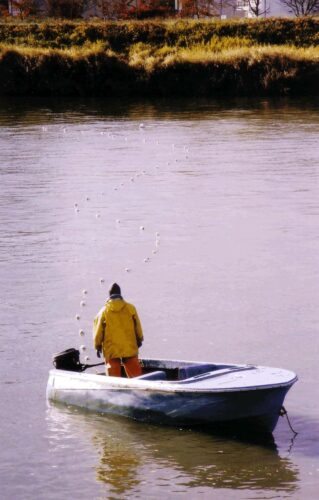
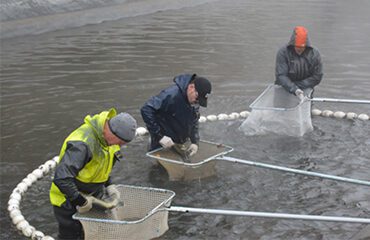
Puyallup Tribal fisherman during chum season on the Puyallup River. Photo courtesy of Emmett O’Connell, NWIFC.
As directed by the Puyallup Tribe of Indians the Puyallup Tribal Fisheries Department shall, “preserve, protect and enhance salmon in usual and accustomed areas, and the water resources that determine their viability.” It’s the department’s goal to fulfill its obligations by leading and participating in habitat restoration efforts, harvest management/policy, fish enhancement projects and research and monitoring activities.
Between the signing of the Medicine Creek Treaty in 1854 and the Boldt Decision in 1974 there was no legal standing for the Puyallup Tribe of Indians to maintain their inherent rights of fishing. As a result of the Boldt decision, the tribe was allocated 50% of harvest and management responsibility for salmon runs on their usual and accustoms fishing areas. Shortly after the mandate, the Puyallup Tribal Fisheries Department began a small office and hatchery. During this time a small number of individuals made great efforts to establish salmon enhancement projects that benefited both tribal and non-tribal fisherman alike.
The Fisheries Department continues to grow and maintains a large presence in the Puyallup River watershed. The department leads efforts to preserve and restore salmon habitat throughout a watershed that is showing many symptoms associated with logging, urbanization, and a rapidly expanding human population. In addition, the tribe continues to identify enhancement opportunities and create restoration projects, while participating in research related to salmon recovery efforts.
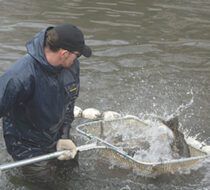
The department closely monitors the status of salmon populations both within and outside its jurisdiction and strives to maintain healthy, harvestable salmon populations for the benefit of all. We continue to refine management practices and participate in decision making processes that protect the resource, while maintaining the Tribe’s cultural and economic identity. The Puyallup Fisheries Department, under the direction of the Puyallup Tribe of Indians, has and will continue to participate and lead efforts in preserving the natural resources that define this unique portion of Puget Sound.
